
Images
Project
Stefano Boeri Architetti (team leader of consortium, coordinator, and landscape architect specialised in the renovation of historic gardens); StudioSilva S.r.l. (agronomist specialised in the renovation of historic gardens, coordinator for safety during the design phase); Fabrica Conservazione e Restauro s.c.p.l. (restorer); Antonio De Simone (archaeologist)
Location
Castellamare di Stabia (NA), Italy
Year
2024 - 2025
Typology
Parks and Gardens
Client
Archaeological Park of Pompeii
Founding Partner: Stefano Boeri, Director: Hana Narvaez, Project Leader: Sara Gangemi, Design team: Francesca Porro, Daniele Barillari, Anastasia Kucherova
Consultants:
ASAP srl SB (CAM and sustainability report), Professionisti S.r.l. (MEP engineer), Paolo Aliperti (structural engineer), Andrej Mikuz (economic strategies expert)
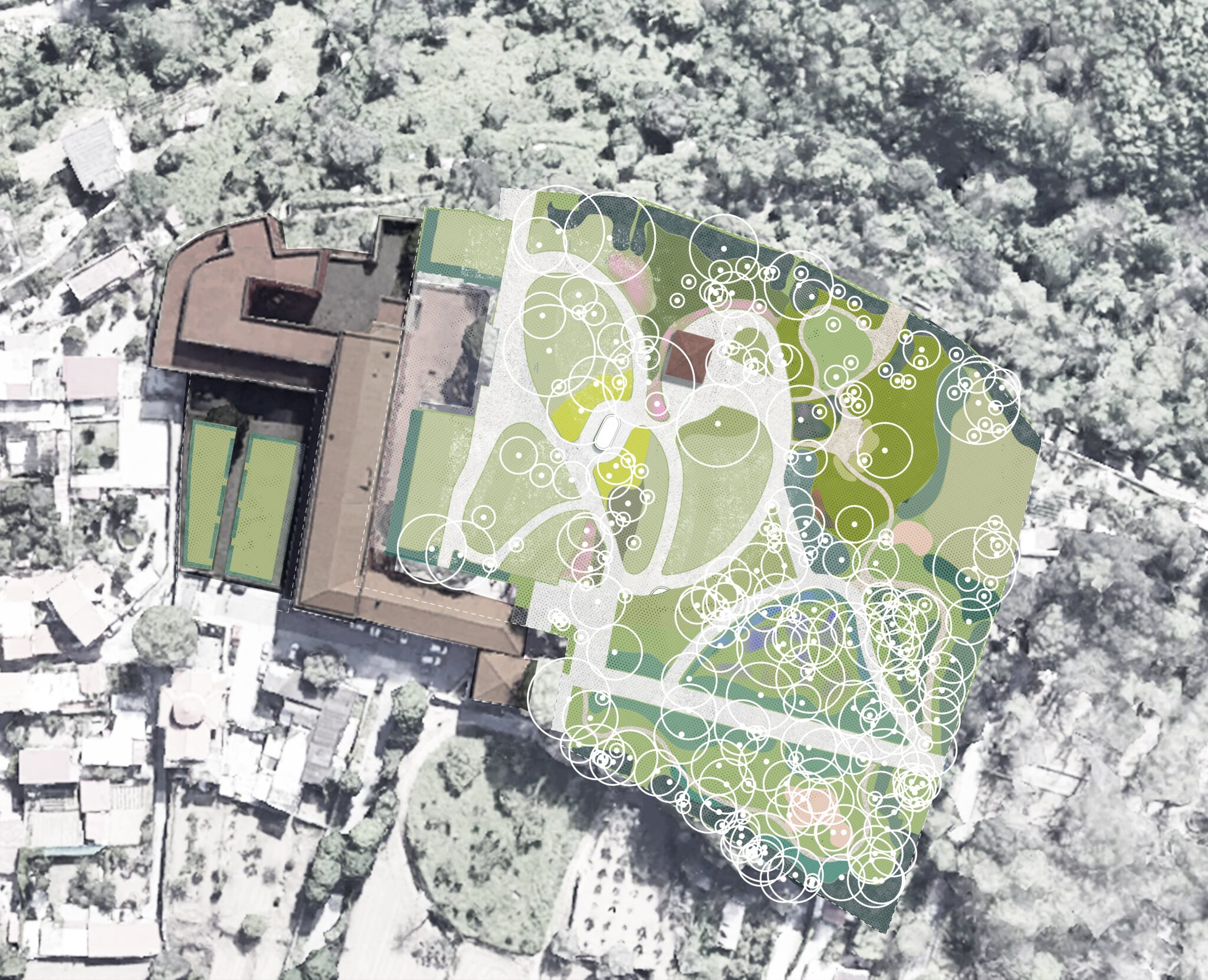
The historic garden of the Royal Palace of Quisisana covers approximately 1.6 hectares on the northern slope of Mount Faito, within the Monti Lattari Regional Park. Originally established in the 13th century as an Angevin hunting reserve, it evolved over time into a garden that blends formal geometries with naturalistic elements, until the last century, when it was closed to the public and left to neglect.
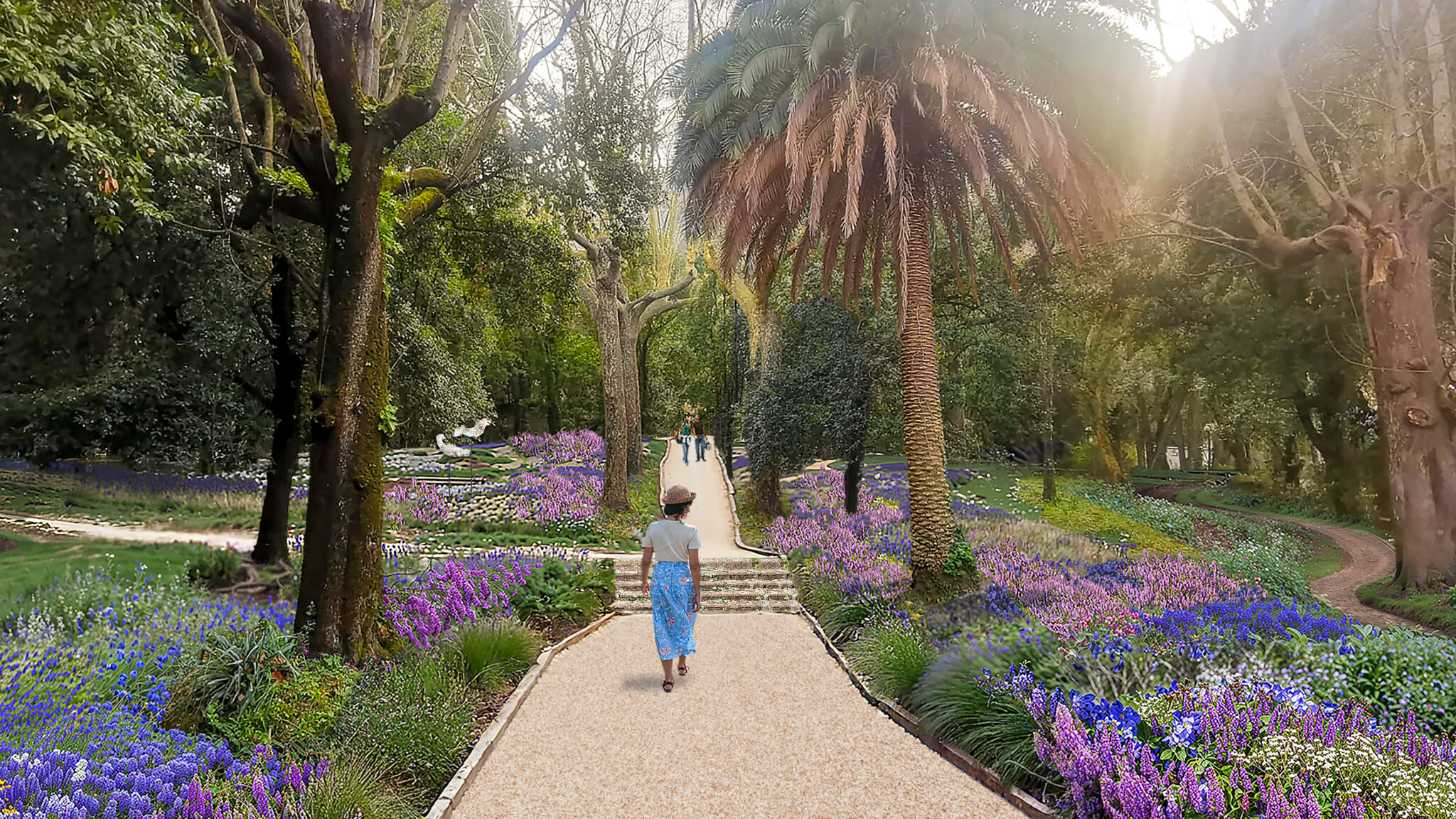
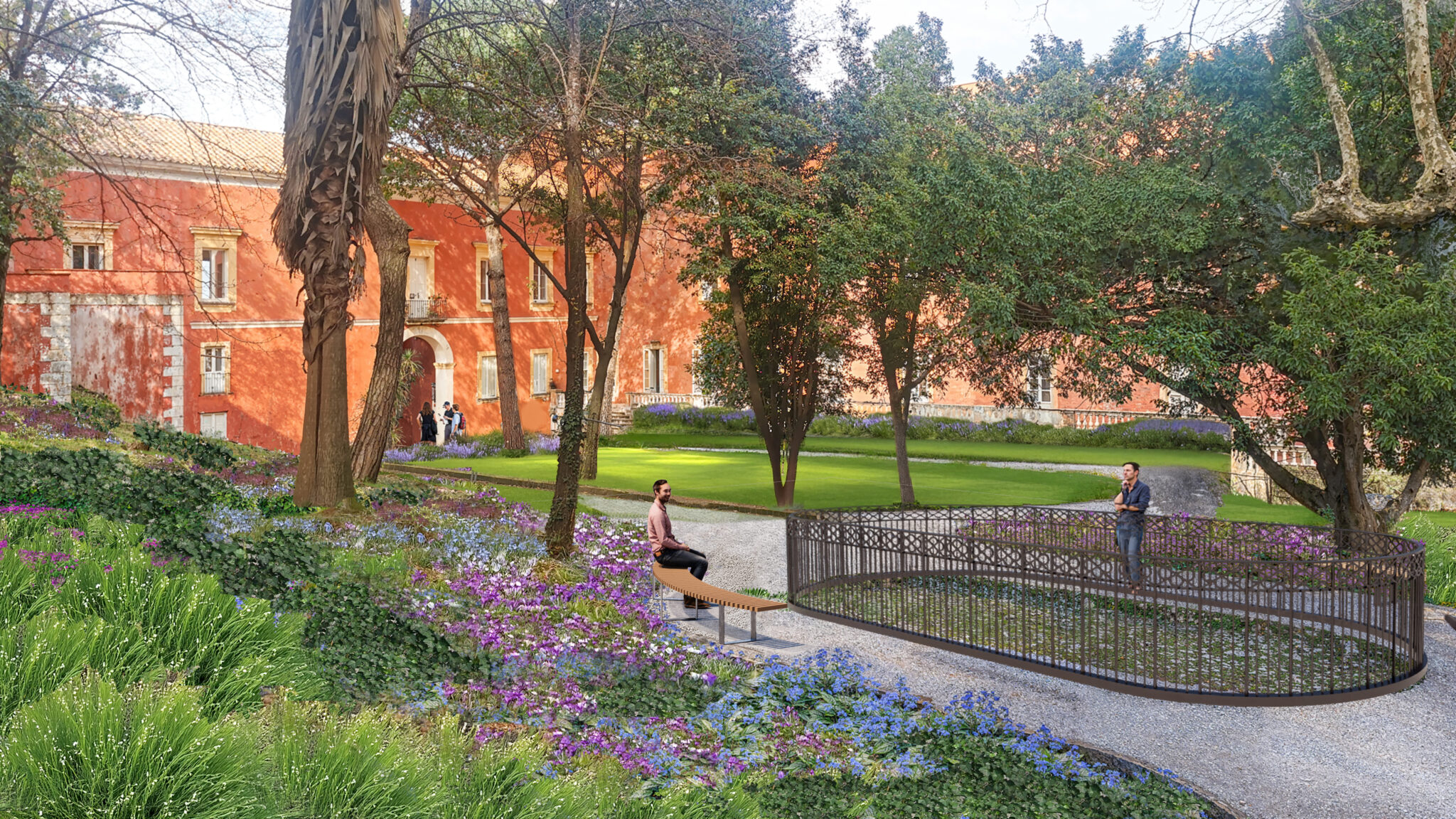
The project conceived by Stefano Boeri Architetti with Studio Silva, Fabrica Conservazione e Restauro and Prof. De Simone aims less at a philological restoration than at recovering the historic traces, treating the garden as a living system in which conservation and transformation go hand in hand. The intervention also seeks to recover the character of the English-style garden developed between the early 19th and 20th centuries, which is still partly legible in the current layout. The main objectives are the gradual restoration of the plant architecture, the restoration of the historic design and of the fountains, and the securing of the park, which will finally be made accessible to all citizens in accordance with the principles of Design for All.
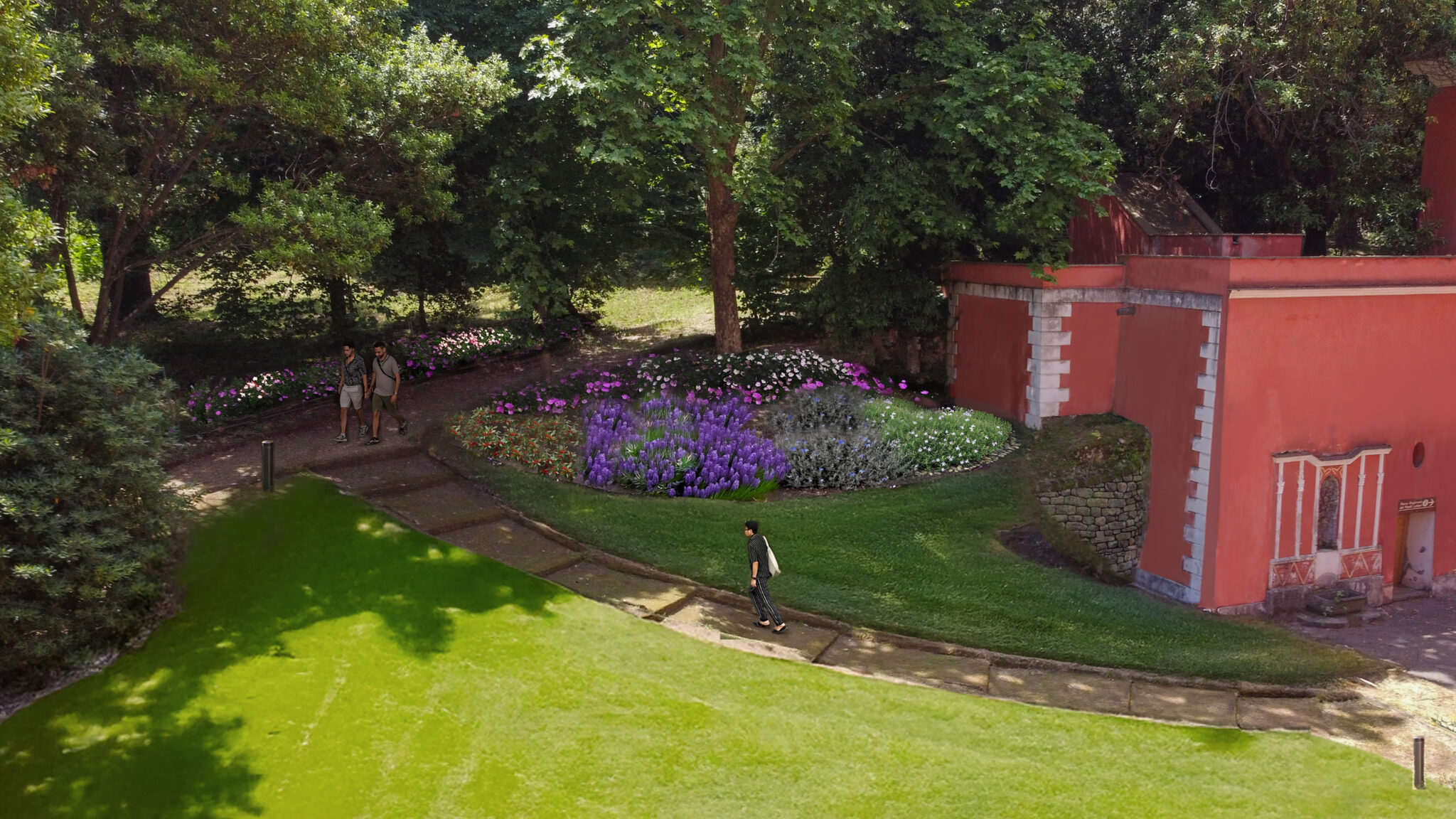
Biodiversity plays a central role, through the reintroduction of species consistent with the local flora and the strengthening of ecological relationships among the different plant components. The arrangement of the greenery follows the site’s historic hierarchy, with a gradual progression of naturalness: from the formal flowerbeds and manicured lawns around the terraces of the Palace, to the less structured areas that lead the visitor into the woodland, the highest expression of naturalness and a refuge for biodiversity.
The architectural interventions are deliberately minimal: conservative and enhancing with regard to existing structures, and integrated in materials and language in the new spaces. The main paths linking the entrance, the Torre Colombaia (Dovecote Tower) and the conference hall regain their original level and are once again edged with stone elements, following the original patterns and construction techniques. The plane tree avenue is enhanced, while elsewhere the historic routes remain legible through differentiated mowing, without the addition of new materials. The plateaus, the exedra with its two fountains and the panoramic terraces become rest areas, with stone seating, lighting and information devices, including engraved split-stone slabs made from stone recovered on site.
The restoration of the monumental components (the stairs and curbs, the fountains, and the sculptural group of the lion and the dragon) is guided by the criteria of durability and enhancement. In the basins, currently inactive, a timed misting system evokes their historic function.
Together, these actions aim to give back to the community of Castellammare di Stabia a heritage of great identity value, transforming the garden into a place of biodiversity, environmental education and historical memory.